Machine learning researcher · Philadelphia, PA

Tianyi Zhou

I build learning systems that remember, adapt, and reason—toward a future where automation creates more room for people to collaborate, create, and live with dignity.

I am an M.S.E. student in Systems Engineering at the University of Pennsylvania, working with the Ale Lab and Huang Lab. My research explores self-evolving memory, continual learning, and useful AI systems that can keep improving in the real world.

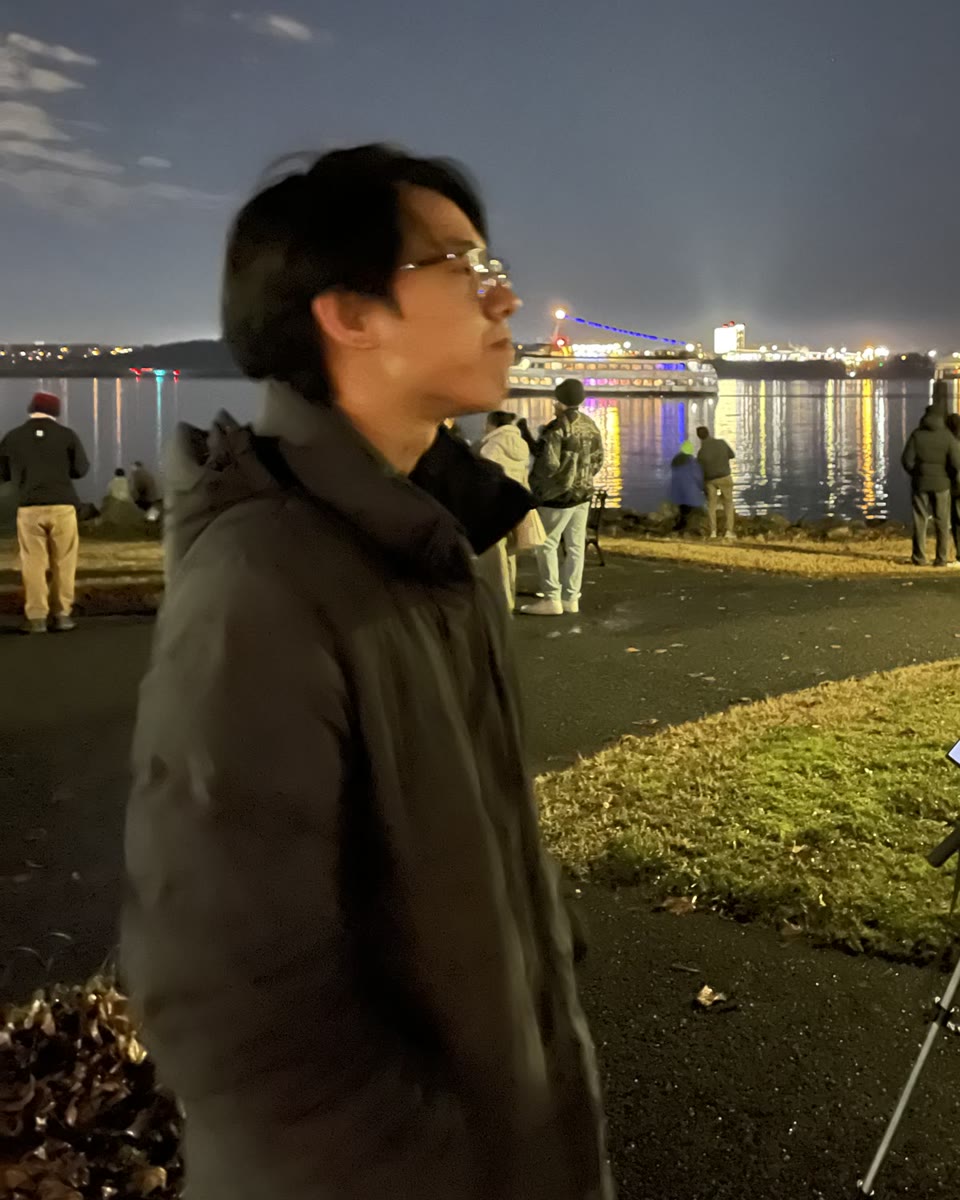
Portrait of Tianyi Zhou
University of Pennsylvania · M.S.E. ’27

Research focus

Self-evolving memory

Continual learning

Human-centered automation

Why I build

From scarcity toward possibility.

I do not expect technology to settle every human question. I do hope to build tools that make more generous answers possible.

01 · THE PROMISE

I grew up alongside the internet.

Its early promise was a more connected world—a “global village” and a better twenty-first century. That future now feels both closer and more fragmented. I still believe computing can help us build something fairer, but I no longer think fairness is simply an optimization objective. Every allocation encodes choices, and even the best-aligned solution can leave someone out.

02 · AUTOMATION

Not replacement. Abundance.

I keep returning to automation: agents that can check their own work, serve people continuously, and learn without erasing what came before. When useful capabilities and essential resources become more available, fewer human problems need to be framed as contests over scarcity.

03 · HOW I WORK

Collaboration over competition.

I am drawn to win–win systems—progress that does not require someone else to lose. Code Forest and PathCAR are early, technical steps toward that larger idea: learning systems that evolve, retain knowledge, and stay useful in the real world.

Selected research

Systems that improve without forgetting.

Current work spans code reasoning, pathology foundation models, and efficient fine-tuning. Each visual summarizes the project’s core mechanism.

Pathology continual learning benchmark: datasets feed foundation models through shared adapters, replay, and knowledge distillation while measuring retention
Ongoing researchHuang Lab · 2026—present

Continual learning for pathology foundation models

A 41-dataset benchmark and PathCAR, a prompt-conditioned adapter-routing direction.

I benchmark LiteFM, BioMedCLIP, and CONCH across full and parameter-efficient fine-tuning, replay, knowledge distillation, EWC, and LoRA-based continual-learning methods. Weight-space analysis reveals adapter interference and motivates routing specialized adapters by task context.

41datasets · 259 classes
0.910retained balanced accuracy
LoRA benchmark comparing standard LoRA, LoRA-FA, AdaLoRA, and VeRA across quality, memory, and latency
Project2024

Benchmarking PEFT on Llama 3

A practical comparison of LoRA variants and their quality–efficiency trade-offs.

We evaluated LoRA, LoRA-FA, AdaLoRA, and VeRA on Llama-3-8B, with an automated LLM-as-a-judge pipeline measuring generation quality alongside memory and latency on Delta HPC.

Background

Research, industry, and teaching.

2026—present

Graduate Research Assistant

Huang Lab · University of Pennsylvania

2025—present

Graduate Research Assistant

Ale Lab · University of Pennsylvania · Advisor: Prof. Osbert Bastani

2024

Machine Learning Engineer Intern

ECCOM · Built tabular ML pipelines and a 90%+ accuracy employee-turnover model.

2023—2025

Teaching Assistant

University of Rochester · Programming, computational statistics, and computer models.

Education

University of Pennsylvania

M.S.E., Systems Engineering · Expected 2027

Previously

University of Rochester

B.S., Computer Science & Data Science · 2024